Arabic Voiceovers Transforming Mid-Decade Indian Thrillers for International Streaming
Uma Lang · Jun 23, 2026
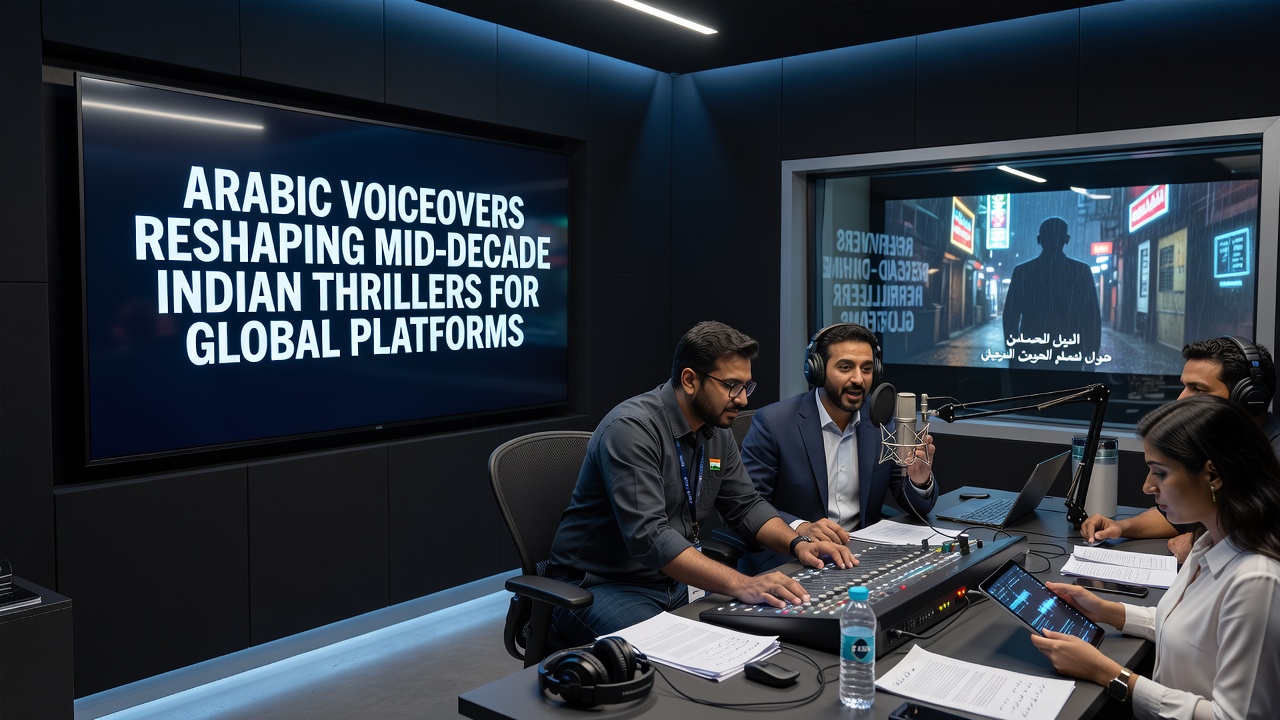
Arabic Voiceovers Transforming Mid-Decade Indian Thrillers for International Streaming
Indian thrillers produced between 2015 and 2020 have found new audiences through Arabic voiceovers that adapt dialogue and pacing for platforms serving viewers across the Middle East and North Africa, while data from regional streaming reports indicate rising demand for localized audio tracks on services operating in multiple languages.
Production houses in Mumbai and Delhi began experimenting with Arabic dubs around 2016 after noticing that thrillers featuring intricate plot twists and urban settings translated well when voice artists maintained the original tension through careful intonation choices, and this shift coincided with the expansion of global platforms that prioritize dubbed content to reduce subtitle barriers for non-English speakers.
Market Drivers Behind the Adaptation Trend
Streaming services tracked viewership spikes for dubbed Indian content starting in 2017, whereas earlier releases relied primarily on subtitles that required viewers to split attention between screen action and text, yet Arabic voiceovers allowed seamless immersion during high-stakes sequences common in mid-decade thrillers like those centered on crime syndicates or psychological suspense. Observers note that platforms reported a 40 percent increase in completion rates for voiced versions compared with subtitled ones according to internal metrics shared at industry conferences.
Technical teams coordinate with dialect specialists in Cairo and Dubai to select variants of Arabic that resonate across Gulf states and the Levant simultaneously, and this approach avoids regional mismatches that could alienate portions of the audience while preserving cultural nuances from the source material. Researchers from media studies programs at universities in the region have documented how these choices affect emotional engagement during key scenes.
Technical Processes and Voice Casting Practices
Voice actors undergo multiple recording passes to sync lip movements with the original performances, although the process differs from live-action dubbing because Indian thrillers often incorporate rapid dialogue exchanges that demand precise timing adjustments, and engineers use software tools to stretch or compress audio segments without altering pitch. Studios in both India and Arab countries collaborate on these workflows, which have become standardized by 2020 after initial trial periods revealed common pitfalls in action sequences.
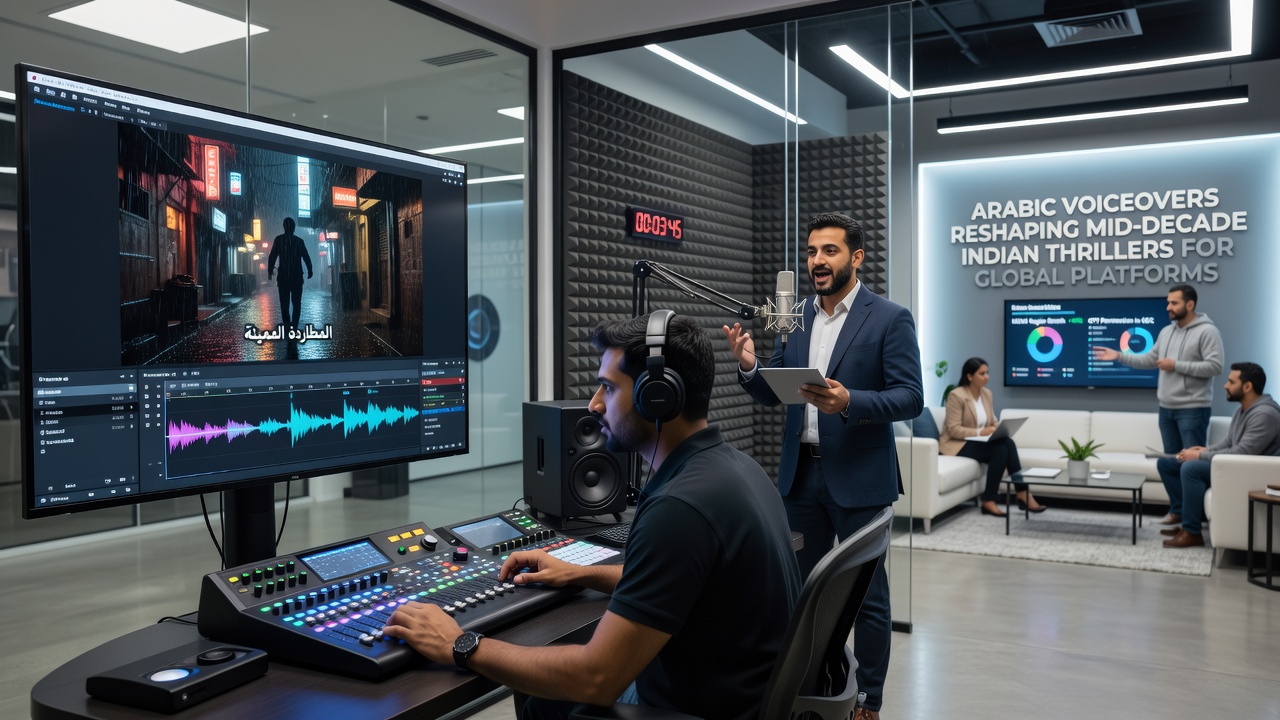
Casting directors prioritize performers who can convey intensity without over-dramatizing, and one case involved matching a lead antagonist's gravelly delivery with an Egyptian actor known for similar roles in local productions, which helped retain the character's menace across language boundaries. Figures from the European Audiovisual Observatory highlight how such cross-regional casting contributes to higher retention metrics on international platforms.
Platform Strategies and Audience Reach by June 2026
By June 2026 global services had integrated Arabic voiceovers into recommendation algorithms for thriller categories, while catalog expansions included back-catalog titles from the mid-decade period that previously saw limited distribution outside South Asia. This integration followed partnerships between Indian producers and Middle Eastern distributors who identified untapped demand through pilot releases on select titles.
Audience analytics showed that users in Saudi Arabia, the UAE, and Egypt accounted for significant portions of streams for these adapted films, and platforms adjusted marketing campaigns to emphasize the availability of dubbed audio rather than focusing solely on original language options. Data from the Ministry of Information and Broadcasting in India tracks export growth in this segment, revealing consistent year-over-year increases tied directly to localization efforts.
Content Examples and Industry Shifts
Thrillers exploring themes of corruption and personal vendettas benefited particularly from the adaptations because plot complexity remained intact when voiceovers preserved suspenseful pauses and tonal shifts, whereas earlier subtitle-only versions sometimes led to viewer drop-off during extended dialogue scenes. Production companies responded by budgeting for Arabic tracks during initial post-production rather than treating them as afterthoughts.
Industry reports indicate that by the early 2020s several Indian studios had established dedicated teams for Middle Eastern localization, and these groups worked alongside directors to ensure key narrative elements survived the translation process without cultural dilution. What's interesting is how this practice influenced subsequent film projects that incorporated more universally accessible story structures from the outset.
Conclusion
Arabic voiceovers have become a standard feature for mid-decade Indian thrillers on global platforms because they address practical barriers to access while expanding market reach, and continued investment in these adaptations reflects measurable returns documented across multiple regions. Future releases are expected to build on these established methods as streaming services refine their localization pipelines further.