Echoes from Distant Studios: Arabic Voice Work Linking Bollywood Dramas with Hollywood Thrillers and Animated Adventures
Jordan Vogel · Jun 14, 2026
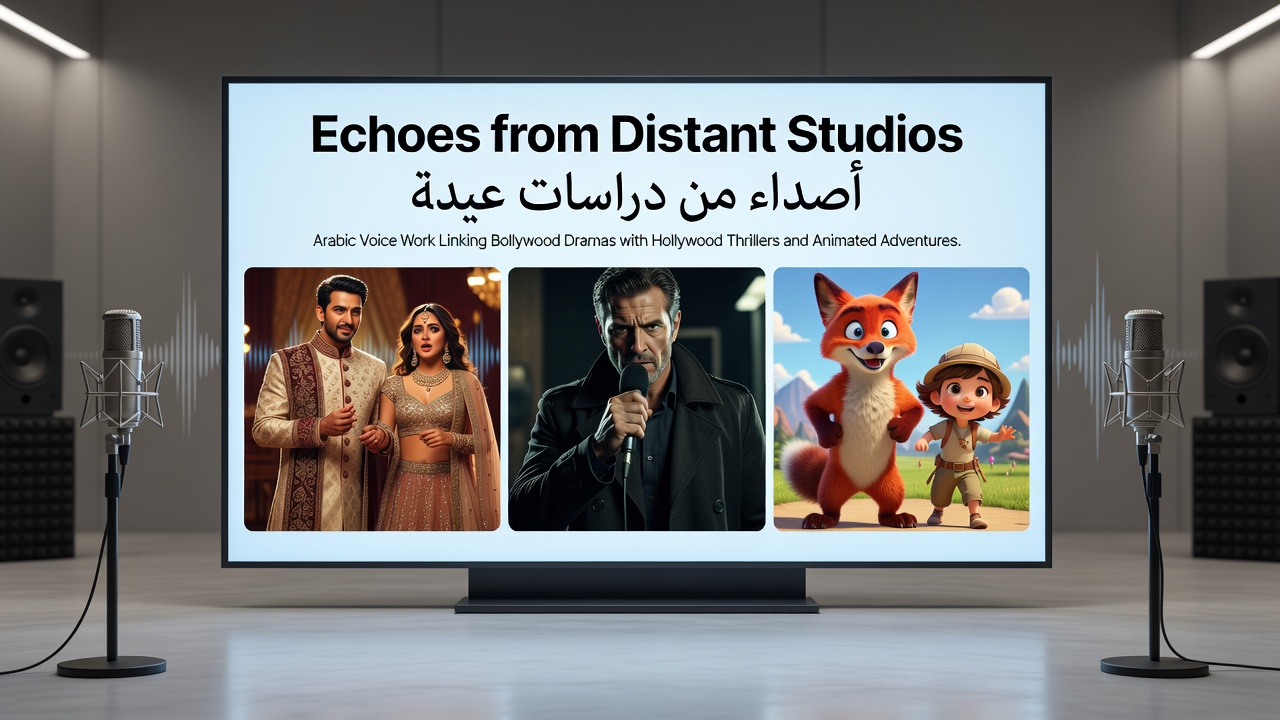
Echoes from Distant Studios: Arabic Voice Work Linking Bollywood Dramas with Hollywood Thrillers and Animated Adventures
Arabic voice work has developed into a specialized field where talent from studios across the Middle East adapts content from Bollywood dramas, Hollywood thrillers, and animated adventures for regional audiences, and this process draws on shared techniques that cross genre boundaries while preserving original narrative tones. Studios in Egypt, the United Arab Emirates, and Lebanon handle much of this output, employing voice artists who record lines that match lip movements and emotional beats from source productions.
Shared Techniques Across Film Categories
Voice directors coordinate sessions that require actors to shift between the heightened emotional delivery common in Bollywood dramas and the restrained intensity typical of Hollywood thrillers, while animated adventures demand exaggerated vocal effects that still align with character designs. Research from the European Audiovisual Observatory indicates that Arabic dubs of Indian and American films increased by 18 percent between 2023 and 2025, reflecting demand for synchronized audio that maintains pacing across these categories. Observers note that many voice performers train in classical Arabic recitation before moving into contemporary media, which provides breath control useful for long monologues in dramas and rapid exchanges in thrillers.
Studio Infrastructure and Regional Hubs
Facilities equipped with digital audio workstations allow teams to layer multiple takes for characters that appear in both live-action thrillers and animated features, and this setup supports efficient turnaround when a single actor voices roles across different projects. Data compiled by the Canadian Media Producers Association shows that co-production agreements involving Arabic-language versions have grown steadily, particularly for titles that combine action elements from Hollywood with song sequences from Bollywood. Engineers adjust equalization settings to suit dialogue-heavy scenes versus musical numbers, ensuring clarity when audiences stream these versions on various platforms.
Voice casting directors often select performers based on range rather than genre specialization, which means an artist known for dramatic roles might also handle comedic sidekicks in animated adventures. This crossover becomes practical because recording schedules align around release windows, and studios maintain databases of talent profiles that list previous credits in each category.
Industry Data and Talent Development
According to figures released by Screen Australia in their 2025 global content report, Arabic-language adaptations accounted for a measurable share of international revenue for both Indian and American productions, with animated titles showing particularly strong uptake among younger viewers. Training programs at institutions such as the American University in Cairo incorporate modules on genre-specific vocal modulation, and graduates frequently contribute to projects that span multiple film types within a single calendar year. Those who've studied archival recordings observe that early Arabic dubs of Hollywood thrillers from the 1990s established timing standards still referenced today when adapting faster-cut Bollywood sequences.
June 2026 marks the scheduled opening of an expanded facility in Dubai that will increase capacity for simultaneous recording of drama, thriller, and animation tracks, and planners have cited rising viewership metrics from North African markets as a key driver. This development follows patterns documented in reports from the Australian Classification Board, which track how dubbed content influences regional distribution strategies for international studios.
Cross-Genre Voice Performance Patterns
Performers adapt pitch and tempo adjustments that work equally well for suspenseful pauses in thrillers and rhythmic phrasing required during dance numbers in dramas, and these skills transfer directly to the broader tonal range needed for animated characters. Industry organizations such as the Motion Picture Association have noted in their annual summaries that localization teams prioritize consistency in character voice identity across different source materials to maintain audience recognition. Case examples include voice artists who began with animated adventure dubs before taking on supporting roles in thriller adaptations, demonstrating how foundational work in one category builds proficiency for others.
Distribution Channels and Audience Reach
Streaming services distribute these Arabic versions through dedicated regional catalogs, and metrics gathered by academic researchers at the University of Toronto indicate that retention rates remain high when dubbing quality matches the emotional arcs of original Bollywood and Hollywood scripts. Technical standards for synchronization have tightened over the past decade, with automated tools assisting human editors who verify alignment frame by frame. This combination of technology and expertise allows studios to process larger volumes without sacrificing the nuances that distinguish dramatic tension from animated humor.
Conclusion
Arabic voice work continues to serve as a connective tissue between Bollywood dramas, Hollywood thrillers, and animated adventures by applying consistent production methods across varied source material. Regional hubs maintain the infrastructure and talent pools that support this integration, while data from multiple international bodies confirm ongoing growth in output and reach. The field evolves through refinements in training, technology, and scheduling that accommodate the distinct requirements of each genre while preserving narrative integrity for Arabic-speaking viewers.